

Areas of Research
Chronic stress, context, and health
I examine how chronic social stressors shape psychological adaptation, health behavior, and physical health. A major focus of this work is acculturative stress among immigrant communities, including how migration, discrimination, social support, relationships, neighborhood conditions, institutional environments, and access to resources contribute to risk and resilience.
I approach these experiences across multiple levels of the social environment rather than treating them as isolated individual risk factors. My goal is to identify the modifiable mechanisms through which social disadvantage and chronic stress influence health and well-being.
Behavioral intervention and prevention science
I develop and test interventions that address modifiable psychosocial and behavioral mechanisms before distress becomes more severe or entrenched. My work integrates evidence-based behavioral strategies with community knowledge to ensure that interventions are scientifically rigorous, culturally and contextually responsive, and relevant to people’s daily lives.
Within this work, I examine not only whether an intervention produces improvement, but also why it works, for whom it works, which components are most important, and how social context influences engagement and benefit.
Implementation in real-world settings
Effective interventions can improve population health only when people can access them and organizations can deliver them with quality. I study how behavioral interventions can be adapted, implemented, and sustained in community and health care settings that serve populations experiencing persistent health inequities.
This work examines reach, feasibility, acceptability, fidelity, adoption, organizational readiness, implementation burden, cost, equity, and sustainment. I am particularly interested in task-shifted models that equip Community Health Workers and other trusted providers to deliver structured interventions outside traditional specialist settings.
Methods and expertise
Community-engaged research and co-development
Quantitative, qualitative, and mixed methods research
Behavioral intervention development and adaptation
Pilot and randomized trial design
Hybrid effectiveness-implementation research
Implementation strategy and outcome evaluation
Community Health Worker-delivered interventions
Fidelity assessment and safety monitoring
Evidence synthesis and evidence mapping
Human-centered design
Interested in collaborating? Let’s chat!
I welcome interdisciplinary collaborations that connect behavioral science, public health, clinical science, health services research, and community expertise. I am especially interested in partnerships focused on intervention development, task-shifted delivery, community implementation, and the health consequences of chronic stress.

Featured Research Projects
Cultivating Resilience
Cultivating Resilience is an eight-session cognitive-behavioral prevention intervention co-developed with Latino immigrant communities to reduce acculturative stress and strengthen psychological well-being.
My team developed the intervention through an iterative community-engaged mixed methods process. Quantitative analyses identified acculturative stress and related psychosocial factors as promising intervention targets, while qualitative interviews helped us understand community priorities, preferences, and contextual considerations for intervention content and delivery. Community consultation and human-centered design then guided the development of an intervention that integrates stress management, mindfulness, psychoeducation, values-based action, interpersonal coping, problem-solving, and social connection.
An initial five-site randomized pilot trial (N=50) comparing Cultivating Resilience to vs. a waitlist control established the intervention’s feasibility and acceptability and produced outcomes in the anticipated direction. This work led to a subsequent question:
How can an intervention that participants value reach people who face substantial barriers to specialty mental health care?
To address this question, we adapted Cultivating Resilience for delivery by trained Community Health Workers in trusted community settings. With foundation funding, we are carrying out a hybrid effectiveness-implementation trial (N=300) testing Cultivating Resilience vs. standard support. In this trial, we are examining both intervention outcomes and the training, supervision, safety, fidelity, and organizational supports needed to facilitate accessible, high-quality, equitable, and sustainable delivery.
This program provides a foundation for my broader goal of developing interventions that preserve their active ingredients while accommodating differences in language, culture, risk, workforce capacity, and delivery setting.
SER Familia
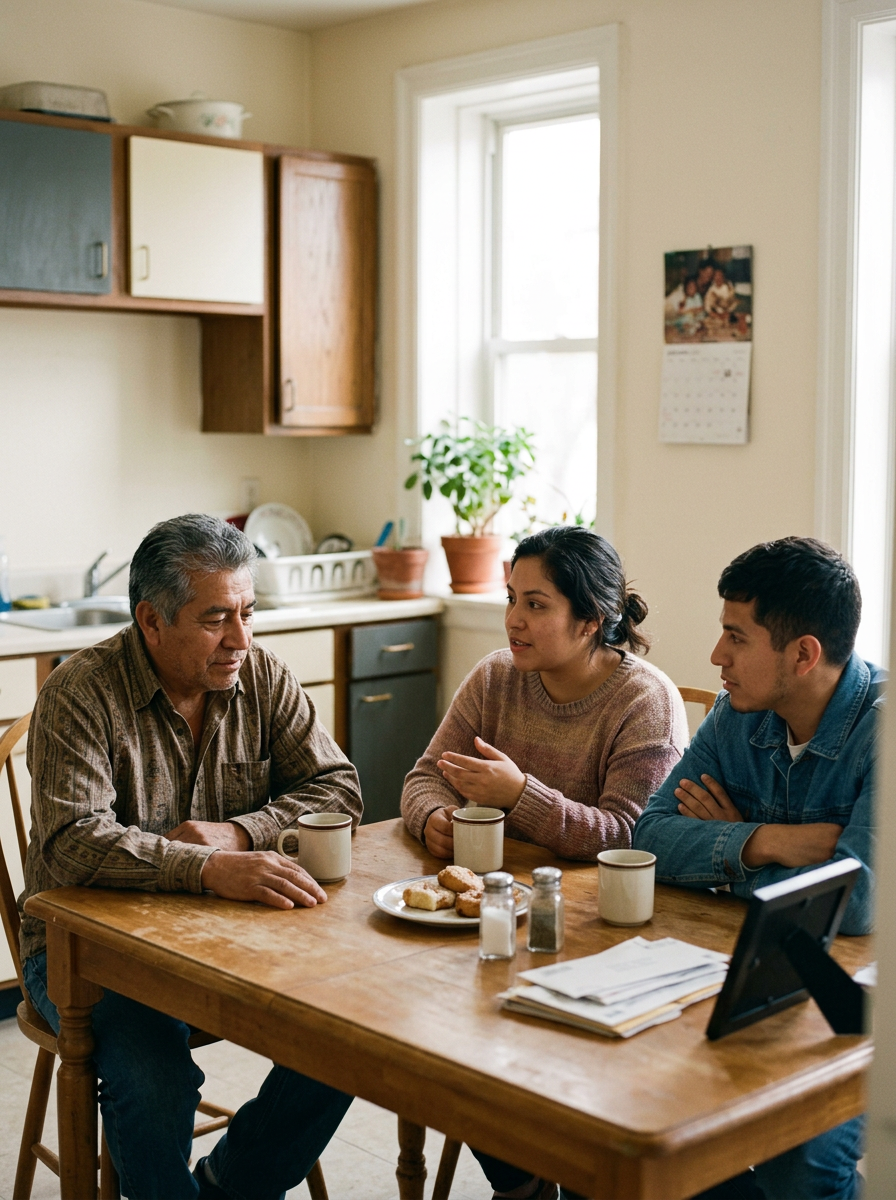
I serve as a Co-Investigator on SER Familia, an NIMHD-funded R01 testing a multilevel, family-based prevention intervention designed to address a syndemic of interconnected health risks among Latino immigrant families, including depression and anxiety, substance use, intimate partner violence, and HIV risk. SER Familia builds directly on our team's foundational research demonstrating that these health risks do not occur in isolation and that acculturative stress is a key social driver of their co-occurrence and of health decline over time among Latino immigrants. This work identified acculturative stress and resilience across individual, family, and community levels as important and potentially modifiable intervention targets.
Drawing on this evidence, SER Familia moves beyond interventions targeting a single disease or behavioral outcome to address the shared social and contextual processes that contribute to multiple, interconnected health risks. The six-session intervention was co-developed with communities and is delivered by community health workers to parent-youth dyads. It seeks to reduce acculturative stress while strengthening protective processes such as coping, ethnic pride, family communication and support, social networks, and connections to community resources. The ongoing randomized controlled trial examines whether SER Familia can prevent or reduce syndemic conditions and tests whether changes in acculturative stress and resilience at the individual, family, and community levels help explain intervention effects.
This project reflects a broader goal of my research: to translate knowledge about the social, cultural, and structural drivers of health into multilevel prevention interventions that address the mechanisms underlying health inequities, rather than treating their downstream consequences in isolation.
I especially like that last sentence for your website because it makes SER Familia an example of your broader research program, rather than simply describing a grant on which you are a Co-I.

Community-led mental health transformation
In partnership with St. Adalbert Parish and collaborators at the Medical College of Wisconsin and Marquette University, I contribute to a series of community-led initiatives focused on building sustainable mental health infrastructure on Milwaukee’s South Side. This work grew from conversations with community partners about the need to move beyond individual programs and develop a more coordinated approach to mental health promotion, prevention, and access to care within the community.
Our work centers trusted community leadership and focuses on strengthening the capacity of community organizations to respond to mental health needs. This includes training Community Health Workers and other local partners, strengthening pathways to prevention and care, developing referral and safety protocols, and building connections across community organizations and health care systems. Importantly, the goal is not simply to bring existing mental health services into the community, but to work alongside community partners to develop an infrastructure that reflects local priorities, builds on existing strengths and relationships, and can be sustained over time.
This work also allows us to examine an important implementation question: what needs to be in place within communities and organizations for evidence-based interventions to successfully reach the people who need them and produce meaningful, sustained improvements in health? By examining these questions alongside the development of community capacity and infrastructure, this work seeks to identify strategies for building more accessible, responsive, and sustainable systems for mental health prevention and care.

Culturally responsive care and workforce development
My interest in culturally responsive care has been a consistent thread throughout my career as a clinical psychologist, researcher, educator, and supervisor. My clinical training made me increasingly aware that providing high-quality care requires more than knowledge of evidence-based treatments. Providers also need the skills to understand how patients’ identities, histories, relationships, and social contexts shape their experiences of health, their interactions with health care systems, and what effective care looks like for them. Much of my work in this area has therefore focused on a practical question: how do we help providers translate cultural responsiveness from an important value into something they can actually do in their everyday practice?
To address this question, I led the development of the TEAM Mental Health Care Delivery Model, a framework designed to translate principles of culturally responsive care into concrete provider behaviors and clinical practices. This work sought to move beyond broad recommendations about cultural competence by identifying what culturally responsive care actually looks like during interactions between providers and patients. I also developed a multicultural peer-consultation model that provides clinicians with an ongoing space to reflect on their work, learn from one another, and consider how culture, identity, power, and context may be shaping their clinical relationships and decision-making. Across these projects, I have been particularly interested in moving beyond one-time trainings that increase knowledge or awareness toward approaches that help providers continually reflect on and strengthen their practice.
These experiences continue to shape how I approach workforce development today. Whether I am training clinicians, students, Community Health Workers, or other community-based providers, I think about workforce development as more than teaching intervention content. It also requires opportunities for practice, feedback, consultation, and ongoing support so that providers are prepared to respond to the people and communities they serve. This work connects my background as a clinician and educator with my current research in intervention and implementation science and reflects my broader commitment to ensuring that evidence-based care is not only effective, but also responsive to the contexts in which it is delivered.